Good Governance: The bedrock for empowering South African communities
Good governance is a central concern for social investors. It is especially critical in the case of community trusts, which exist to benefit thousands of community members, typically as part of broad-based ownership schemes. Strong governance that builds accountability and trust is essential for these trusts to deliver on their mandate. Without it, their efforts can exacerbate tensions at community level without contributing meaningfully to development. On 26 July 2024, in partnership with the Minerals Council South Africa, Tshikululu hosted the second in a series of dialogues focusing on community trusts in South Africa. The session dealt with questions of governance through an exploration of challenges in the sector and how members of the Minerals Council are responding to them.
Tshikululu’s 2022 community trust benchmarking study identified governance as a key priority for community trusts. Governance is a broad area of concern, covering aspects as diverse as trust registration and structure, tax considerations, trustee composition and appointment, centralised vs. de-centralised decision-making, reporting and accountability. Community trusts face unique governance challenges, existing at the intersection of B-BBEE ownership requirements, accountability to the community members whose ownership they hold, and their connection to a founding company. The dialogue provided an opportunity for sector and community trust representatives to explore this complexity and learn from one another’s experiences.
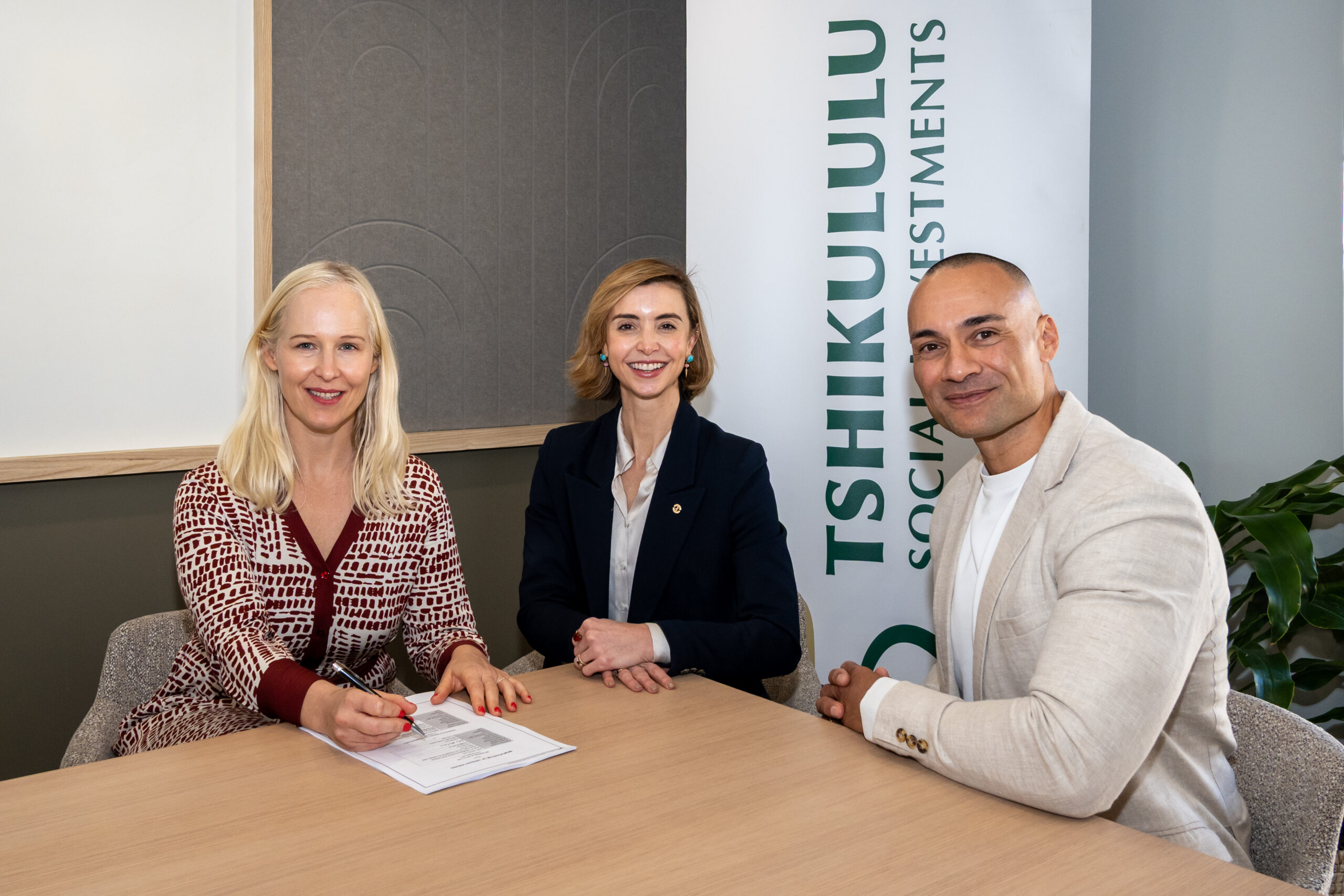
Speaking at the event, Tshikululu CEO Tracey Henry emphasised the importance of thinking beyond legalistic issues in our approach to governance. By definition, the decisions made by community trusts affect large numbers of people, and so it is essential to approach governance with a clearly defined understanding of the trust’s purpose and the structures and processes necessary to achieve it and drive impact.
Three panellists shared their experiences of community trust governance and its role in achieving trust objectives:
• Werner Duvenhage, Managing Director at Richard’s Bay Minerals (RBM), stressed the importance of sharing challenges as well as success stories as part of a collective attempt to strengthen community trusts. Having commissioned Tshikululu to undertake the benchmarking research project in 2022, RBM has since used the report to strengthen governance in its own trusts. An understanding of best practice has led to RBM clarifying its trust deeds and clearly delineating the role of the founder, the appointment process for trustees, and how beneficiaries are defined. Understanding the communities and engaging with key stakeholders has also been critical in refreshing the trusts and ensuring that governance concerns are discussed with and understood by community stakeholders.
• Vusani Malie, CEO of SIOC-CDT, discussed the incremental journey towards SIOC-CDT’s current governance structure, which involved adopting many corporate principles and setting up a robust committee structure that supports accountability. Trustee selection and composition are key considerations for the trust. The trust has a whistleblower system to promote transparency, and a process through which regular feedback is given to communities to build trust.
• Reza Bardien, responsible for Operations Management at Lefa La Rona Trust, identified good governance as the bare minimum consideration for a trust to be successful. For the Anglo American Platinum Alchemy Project, in which Lefa La Rona is the umbrella trust, a decentralised structure that builds agency through community-level development trusts is aligned with its goal of inclusive and transformative impact. The trust deed is designed with consideration of the balance between the founding company and the independence of the trusts. The founder has minority representation, but retains step-in rights in the case of breaches of governance.
In our experience managing community trusts, Tshikululu has found that a detailed trust deed and well structured relationship between the trust and the founder company are central to good governance. A strong trust deed sets up a trust for success by outlining what it can and cannot do and how any governance concerns will be handled. The presence on the board of at least one founder trustee to represent the company, alongside independent and sometimes community trustees, provides a link to the company without enabling undue influence over the trust’s activities. In addition to these practical concerns, the dialogue highlighted two main considerations for social investors in the community trust space:
1. Governance must be designed with the intention of supporting the trust’s vision and strategy. This means thinking beyond basic compliance: decisions around governance structures and processes must be made intentionally to provide a strong framework for sustainable impact.
2. All three panellists highlighted the role of stakeholder management and collaboration as inextricable from governance concerns. Community trusts operate within contexts with diverse cultures, priorities and networks. Good governance provides a foundation for transparency and accountability, which are key to building trust among stakeholders.
As the community trust ecosystem continues to evolve, founder companies and their associated trusts are in a position to define what its future looks like. The dialogues hosted by Tshikululu and the Minerals Council provide a site for engagement around best practice, so that we can work collectively to strengthen community trusts and drive social impact.
The previous dialogue in partnership with the Minerals Council South Africa was on impact strategy for community trusts.
Tshikululu is South Africa’s leading social investment fund manager and advisor, working alongside investors and other development partners to achieve sustainable social impact. More information about our services can be found on our website, or you can contact us at in**@************rg.za.